The honest case
Why Germany?
Before the forms, the appointments and the formal letters, it's fair to ask what you get in return. The answer starts with a story — because you are not the first to make this journey.
1955 onwards
A country rebuilt by people who arrived with a suitcase
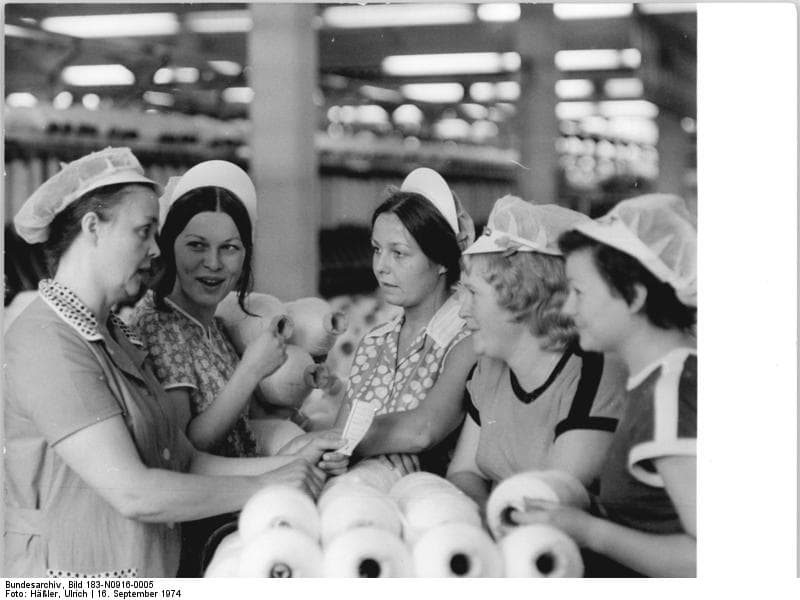
After 1945, Germany rebuilt itself from rubble into Europe's largest economy — and it could not have done so alone. From 1955 it signed recruitment agreements with Italy, then Greece, Spain and Turkey, and millions of so-called guest workers (Gastarbeiter) arrived by train with one bag and a work contract. Many planned to stay two years. They stayed for good, raised families, and helped build the prosperity people move here for today.
A nation of arrivals
Today, more than one in four has an immigration story
Reunification, the European Union, and decades of students, engineers, nurses and researchers arriving from everywhere have made modern Germany one of the world's great immigration countries. More than a quarter of the people living here have immigration in their family story. The country you are considering is not a closed club — it is a place that has been absorbing newcomers, imperfectly but persistently, for seventy years.
Now — deliberately open
The door isn't ajar. It's held open.
An ageing workforce means Germany needs hundreds of thousands of skilled newcomers every year — so the rules keep bending toward you: the Skilled Immigration Act opened more routes, the EU Blue Card thresholds came down, the Chancenkarte lets qualified people come and search from inside the country, and citizenship is now possible after five years. Immigration isn't a loophole here; it's the plan.
What hasn't changed since the Gastarbeiter era: the counters, the forms, and the letters in formal German. Every generation of newcomers has faced that same maze — the Anmeldung, the Ausländerbehörde, the Krankenkasse. That maze is exactly why this site exists. You walk the same road they did, but with a guide that knows your city.
So what do you actually get?
The concrete case — study, work, daily life and the long game — plus the hard parts told straight.
Study
A degree that costs less and counts more
No tuition at public universities
Germany's public universities charge no tuition fees, even for international students — you pay only a modest semester fee (often €150–350) that usually includes local transport.
Find your programmeA qualification the world respects
German engineering, science and research degrees carry weight globally, and the system is built around real, employable skills.
How admission worksWork
An economy that actually needs you
A genuine skills shortage
Europe's largest economy is short of skilled people in IT, engineering, healthcare and the trades — so the immigration system is designed to bring qualified workers in, not keep them out.
Understand the work routesThe EU Blue Card and Chancenkarte
The Blue Card fast-tracks residence for graduates earning from €50,700 (€45,934.20 in shortage fields), and the points-based Chancenkarte lets qualified people come and job-hunt from inside Germany.
See which fits youStrong worker protections
A statutory minimum wage (€13.90/hour in 2026), at least 20 paid vacation days by law — commonly 28–30 — and a culture that takes evenings and weekends seriously.
Life
A daily life that works
Healthcare that has your back
Health insurance is mandatory and universal — from day one you're covered by one of the world's most reliable systems, whether public or private.
Sort your insuranceGet everywhere for €63 a month
The Deutschlandticket gives you nationwide regional trains, trams and buses for one flat monthly fare — cities are dense, walkable and genuinely car-optional.
Sort your transportSafe, stable, and central
Low crime, strong institutions, and a location that puts most of Europe within a short train or budget flight.
The long game
A path that leads somewhere
Room to stay and grow
Graduates get 18 months to find a job after finishing — one of Europe's most generous post-study offers — and skilled workers can bring their families.
Your residence permitToward permanent residence — and a passport
Time in Germany counts toward permanent residence, and naturalisation is now possible after as few as five years (three with exceptional integration).
Staying long-termThe honest bit
It's not all easy. Go in with eyes open.
Germany rewards patience and preparation. These are the parts people find hardest — and every one of them has a page here to help.
The language is real
You can start in English, but life, paperwork and deeper friendships open up with German. Be honest with yourself about learning it.
An honest look at the languageThe bureaucracy is a lot
Appointments, forms, and letters in formal German — exactly the maze this whole site exists to walk you through, city by city.
Common problems, solvedHousing is competitive
In big cities, finding a first flat takes patience and a tidy application — start early and know the process.
Finding your first placeConvinced? Let's make it happen.
Answer a few quick questions and get the exact steps for your path and your city.
General information, not legal or immigration advice. Figures reflect 2026 and can change — verify specifics on the linked guide steps and their official sources.